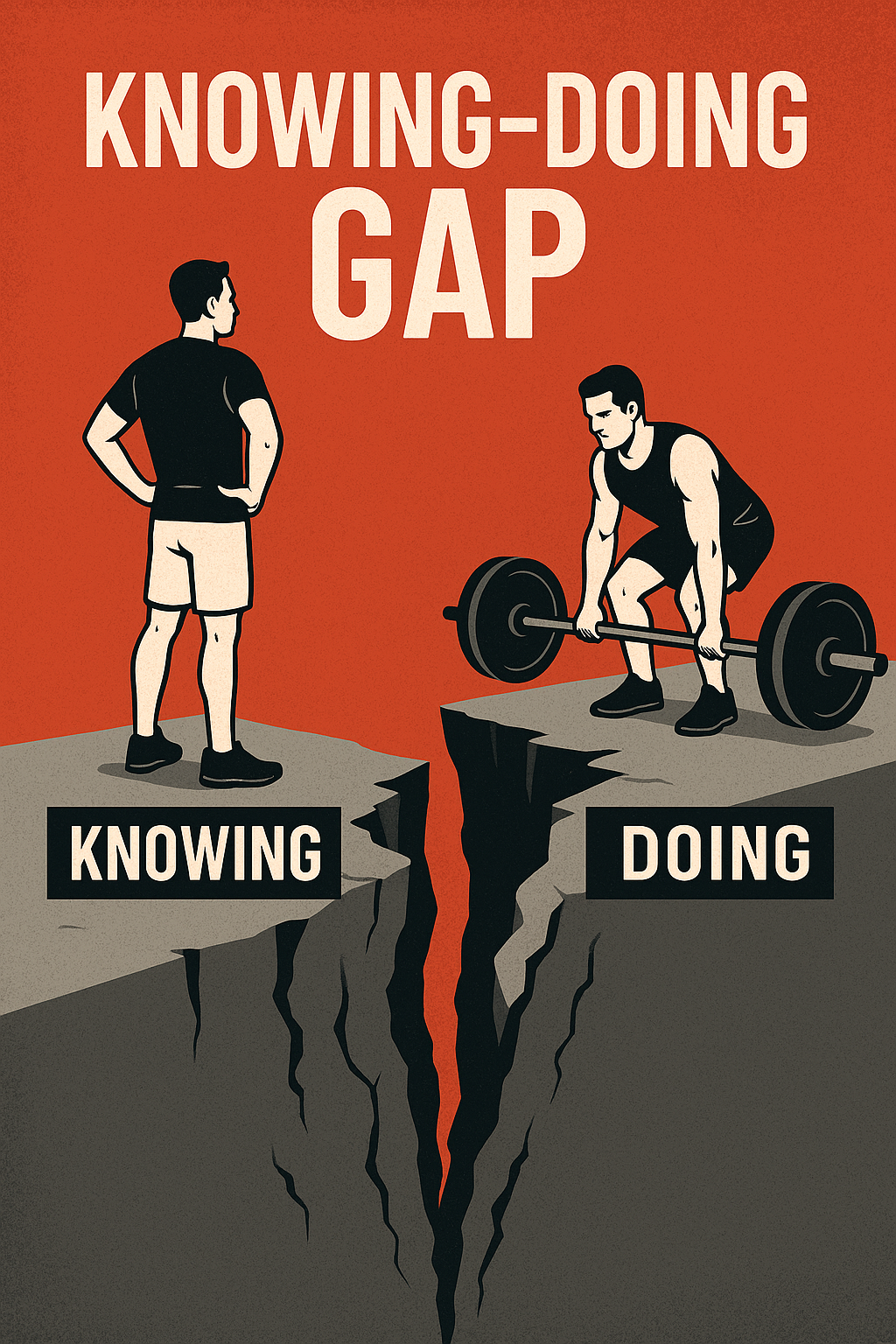

You don’t just want a stronger body.
You want a brain that doesn’t fold when life gets heavy.
You’ve probably noticed this pattern:
When life is calm, you can track macros, hit workouts, stay focused.
When work, family, and stress pile up, your discipline evaporates.
You tell yourself, “I’m just not mentally tough enough.”
What you’re really talking about is cognitive grit—your brain’s ability to stay engaged with hard things, think clearly under stress, and come back after setbacks.
The good news: your brain is not fixed.
Thanks to neuroplasticity, it can rewire and adapt throughout your life.
Cognitive grit isn’t something you’re born with or without. It’s something you train.

Your Brain Is Built to Adapt (If You Give It the Right Stress)
Neuroplasticity is your brain’s ability to change its structure and function in response to experience—learning a skill, changing a habit, or recovering from stress or injury.
-
New challenges = new neural connections.
-
Repeated practice = stronger pathways.
-
Avoiding discomfort = circuits for avoidance get stronger instead.
Resilience research shows that how we interpret and respond to stress can lead either to maladaptive changes (more anxiety, worse self-control) or to stronger coping and emotional regulation.
So when you lean into productive discomfort—hard training, tough conversations, disciplined routines—you’re not just “toughing it out.” You’re literally shaping a more resilient brain.
Discomfort: Growth Signal, Not Just Pain
Most people treat discomfort like a stop sign:
Workout feels hard → “This isn’t for me.”
Hunger between meals → “My body must need more.”
Social anxiety at the gym → “I shouldn’t be here.”
But a growing wave of psychology and resilience work is saying the opposite:
Discomfort is often a growth signal, not a danger signal.
-
Avoiding discomfort shrinks your world.
-
Facing it (in controlled, repeatable ways) trains your brain to:
-
Tolerate distress
-
Stay online under pressure
-
Trust that “hard” doesn’t mean “unsafe”
-
That’s the core of cognitive grit: you don’t panic at friction. You expect it.
What Is Cognitive Grit, Exactly?
For our purposes, cognitive grit is:
The ability to hold focus, make disciplined choices, and stay in the game mentally—even when your emotions, urges, and environment are pushing you to bail.
It shows up when you:
-
Finish your training block instead of quitting halfway
-
Stick to your plan after a bad day instead of nuking your progress
-
Get back on track after a setback instead of spiraling
Research around mental toughness, cognitive reappraisal, and distress tolerance all points to the same idea: people who consistently interpret stressors as manageable challenges (not catastrophes) become more resilient and perform better under pressure.
You’re not just thinking differently; you’re wiring your brain to stay composed and effective when things get rough.
Mental Toughness Drills to Train Cognitive Grit
You don’t build cognitive grit by reading about it.
You build it with reps.
Here are practical drills that tap neuroplasticity and train a more resilient brain.
1. Controlled Discomfort Sessions
Pick small, safe ways to experience discomfort on purpose:
-
End your shower with 30–60 seconds of cold
-
Do the last set of an exercise a little slower, feeling the burn
-
Sit with a craving for 10 minutes before deciding what to do
This kind of exposure training—systematically facing discomfort instead of escaping it—helps your brain learn that “hard” sensations are survivable and often productive.
Rules for controlled discomfort:
-
Start small and repeat often
-
Keep the dose challenging but not overwhelming
-
Pair the act with an identity statement: “This is me training my cognitive grit.”
Over time, your brain starts associating discomfort with growth, not just suffering.
2. Cognitive Reappraisal Reps
Cognitive reappraisal is the skill of changing how you interpret a situation so it feels more manageable and less threatening.
Example:
Default: “This workout feels awful; I’m out of shape; this sucks.”
Reappraisal: “This is what getting stronger feels like. Hard doesn’t mean I’m failing; it means I’m training.”
Meta-analyses show that people who practice reappraisal regularly tend to have higher resilience and better mental health, and it’s a core mechanism in many resilience programs.
Reappraisal drill:
-
Catch the first negative thought: “This is too hard.”
-
Name it: “That’s my avoidance brain talking.”
-
Reframe: “Hard means I’m building capacity. Let’s do the next small step.”
You’re not lying to yourself; you’re choosing a lens that keeps you engaged instead of checked out.
3. Stress Inoculation Workouts
Stress inoculation training exposes you to manageable stress so you build tolerance and confidence, rather than being blindsided by it. It’s been used with athletes, first responders, and even police to reduce performance drops under pressure.
You can borrow this principle in your training:
-
Occasionally add time pressure: “I’ll complete this circuit in 12 minutes.”
-
Simulate “bad day” workouts: train after a long day with a scaled session instead of skipping.
-
Use noisy or slightly distracting environments instead of waiting for perfect conditions.
The goal isn’t to crush yourself; it’s to teach your brain:
“I can still execute the plan when conditions aren’t ideal.”
That’s cognitive grit in the wild.
4. Mindfulness for Grit (Not Just Relaxation)
Mindfulness isn’t just “calm vibes.” In athletes, mindfulness has been linked to better distress tolerance, mental toughness, and cognitive reappraisal—all pieces of cognitive grit.
Try this:
During a hard set or a tough craving, notice:
-
What you feel in your body
-
The thoughts trying to talk you out of it
Instead of obeying them, say:
“This is discomfort. I can observe it and still choose my action.”
You’re teaching your brain to watch the storm without becoming it.
How Disciples of Discipline Helps You Train a Resilient Brain
At Disciples of Discipline, we’re not just chasing aesthetics—we’re building people who can hold the line when life swings.
That’s why we focus on:
-
Discipline-themed shirts and gear – When you see that logo in the mirror during a hard set, it’s a reminder: we lean into discomfort on purpose.
-
Structured daily discipline programs – Clear actions for movement, mindset, and macros that double as daily cognitive grit training: repeatable, slightly uncomfortable, 100% doable.
-
Mindset + brain-focused education – So you understand what neuroplasticity, stress, and reappraisal are doing under the hood—and stop labeling yourself as “weak” when you’re actually just untrained.

You’re not stuck with the brain you have today.
You’re shaping the brain you’ll fight with tomorrow.
Final Reminder – Cognitive Grit Is Earned, Not Gifted
You won’t wake up one morning suddenly “mentally tough.”
But you can:
-
Choose one small discomfort each day
-
Reframe one hard moment instead of escaping it
-
Show up for one messy, imperfect session instead of skipping
Every time you do, you’re voting for a more resilient brain and a stronger identity as a Disciple of Discipline.
Cognitive grit isn’t about feeling nothing.
It’s about feeling everything—and doing the right thing anyway.