
You wake up tired.
Work runs late.
You look at your workout plan or your food tracker and your first thought is:
“I just don’t feel like it.”
This is the moment where most people lose.
Not because they’re weak, but because they’ve been trained to believe:
-
You need to feel motivated to take action
-
“Not feeling like it” is a valid reason to delay
-
One skipped session doesn’t matter
The problem? Those tiny “I’ll do it tomorrow” moments stack up. That’s how months pass while your goals stay exactly where they were.
At Disciples of Discipline, we don’t pretend motivation will always be there. We build systems for the exact moment you don’t feel like it—because that’s when your identity is really decided.
Let’s break down what’s actually happening and what to do instead.


Why You Don’t Feel Like It (You’re Not Broken)
When motivation disappears, it usually isn’t a moral failure. It’s a mix of:
-
Fatigue – Poor sleep, long days, stress
-
Emotional load – Anxiety, boredom, frustration, low mood
-
Friction – Workout feels too big, food plan feels overwhelming
-
No clear next step – Your brain defaults to “later” when the path isn’t obvious
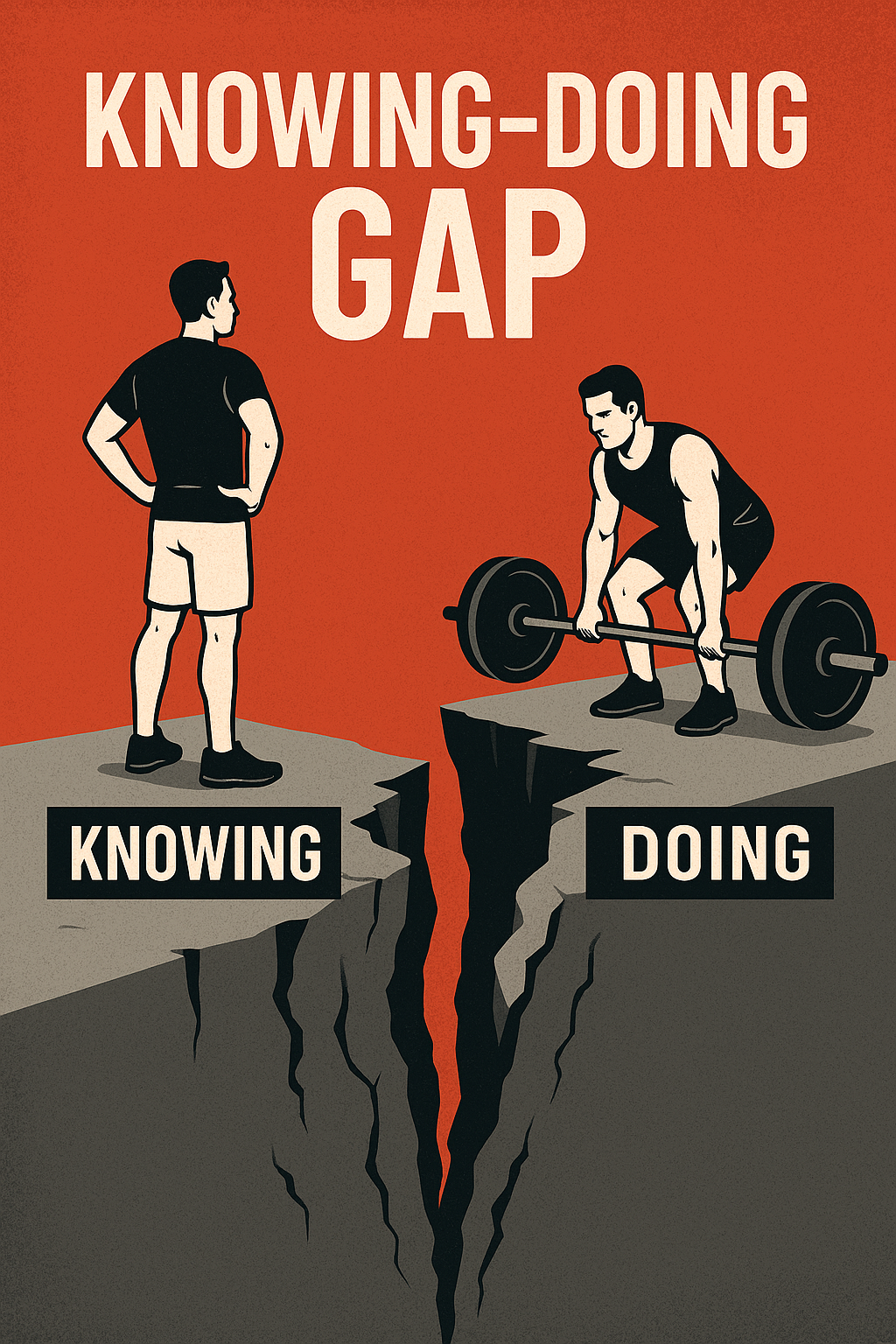
Psychology has a name for this trap: the intention–behavior gap. You fully intend to train, eat better, or go to bed on time—but there’s a gap between that intention and what you actually do.
You won’t solve that gap with more hype.
You solve it with rules, structure, and tiny actions that don’t care how you feel in the moment.
Step 1: Acknowledge the Feeling — Then Decouple It from Action
The worst thing you can do is pretend:
“No, I actually do feel like it!”
You don’t. And that’s okay.
A better move:
-
Call it out: “I don’t feel like training right now.”
-
Decouple feeling from action: “I don’t need to feel like it to do it.”
Motivation says:
“When I feel ready, I’ll act.”
Discipline says:
“I act according to my standards, not my moods.”
This simple mental shift keeps you from making feelings the decision-maker.
Step 2: Shrink the Task Until It’s Almost Stupidly Easy
When you “don’t feel like it,” the full task usually looks too big:
-
A 60-minute workout
-
Perfect macros
-
An entire week overhaul
Your brain sees that and hits avoid.
So you respond with task shrinkage:
-
Don’t commit to a full workout. Commit to 10 minutes.
-
Don’t commit to a perfect day of food. Commit to one solid meal.
-
Don’t fix your whole life. Fix the next hour.
Examples:
-
“I don’t feel like lifting.”
→ “Okay. I’m doing 10 minutes: squats, push-ups, rows.” -
“I don’t feel like tracking all my food.”
→ “Okay. I’m logging just dinner tonight.” -
“I don’t feel like walking 10k steps.”
→ “Okay. I’m putting on shoes and walking for 7 minutes.”
If that sounds too small to matter, good. You’ve found the right size for low-motivation days. The point is keeping the promise, not hitting a PR.
Step 3: Use Your “Bare Minimum” Rule
Every Disciple should have a bare minimum standard:
“Even on my worst day, this is what I still do.”
That might be:
-
10 minutes of movement
-
Hitting your protein target even if calories aren’t perfect
-
No snacking after 9 p.m.
-
5 minutes of planning for tomorrow
The bare minimum rule does two things:
-
Protects your identity – You stay the person who shows up, even if the dose is small.
-
Stops the “screw it” spiral – One rough day doesn’t turn into a rough week.
Write your bare minimum somewhere visible—on your fridge, in your notes app, on your gym whiteboard. When “I don’t feel like it” shows up, you don’t negotiate. You default to the minimum.
This is where a Disciples of Discipline shirt or hoodie becomes more than merch. You put it on and it’s a physical reminder: we do the bare minimum at least, no matter what.
Step 4: Use If–Then Rules So You’re Not Relying on Feelings
If you’re always asking, “Do I feel like it?”, you’ve already lost.
Instead, set if–then rules:
-
“If it’s 7 p.m. and I’m home, then I move for 10 minutes.”
-
“If I want to skip the gym, then I still go and do one main lift.”
-
“If I have a bad meal, then my very next meal is back on plan.”
You remove the drama and emotion. You’re just executing a script.
This is exactly how a structured daily discipline program works: it gives you predetermined actions for each day so you’re not reinventing the wheel every time motivation dips.
Step 5: Change the Question You Ask Yourself
Most people live in this loop:
-
“Do I feel like it?”
-
“How tired am I?”
-
“Is today a good day to start?”
New questions:
-
“What would the disciplined version of me do for the next 10 minutes?”
-
“What’s one rep I can do right now?”
-
“How can I keep the promise to myself in a small way today?”
You don’t have to live up to your ideal self every day.
You just have to be a little more disciplined than the old you, today.
Step 6: Celebrate Completion, Not Perfection
When motivation disappears, perfectionism loves to jump in:
-
“If I can’t do it perfectly, what’s the point?”
The point is reps, not perfection.
At the end of the day, ask:
-
Did I do something aligned with my goals?
-
Did I keep at least one promise to myself?
-
Did I show up, even at 50%?
That’s what builds confidence: evidence.
Confidence doesn’t come from saying “I’ll be disciplined someday.” It comes from a stack of days where you acted disciplined even when you didn’t feel like it.
How Disciples of Discipline Fits Into This
Our mission is not to make you feel hyped.
It’s to help you execute when the hype is gone.
We do that by giving you:
-
Discipline-themed shirts and gear – physical anchors that remind you who you are when your brain is begging to tap out.
-
Structured daily discipline programs – clear, realistic actions for movement, mindset, and macros so your only job is to show up and follow through.
-
Mindset + execution frameworks – like the bare minimum rule, if–then scripting, and identity-based habits that keep you moving when motivation disappears.


You’re not supposed to feel like it every day.
You’re supposed to act according to your standards, regardless of how you feel.
That’s what makes you a Disciple of Discipline.