
You’re not failing because you don’t care enough.
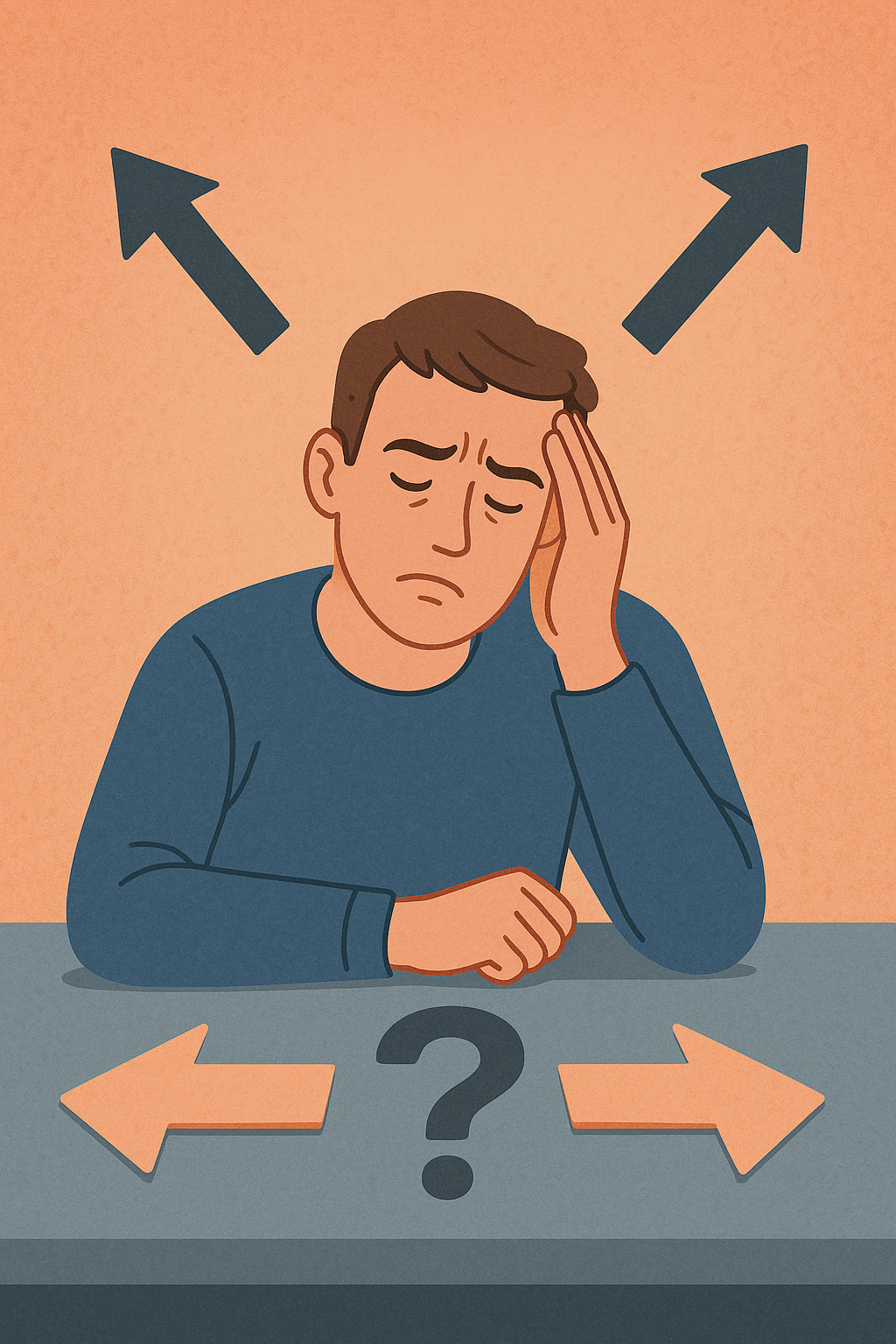
You’re failing because your brain is cooked by the time it’s time to make the right choice.
All day you decide:
-
Reply now or later?
-
Take that call or ignore it?
-
Handle this problem or push it to tomorrow?
-
Be patient… or snap?
By the time you get to:
-
“Should I train?”
-
“Should I cook or order in?”
-
“Should I stick to my plan tonight?”
…you’re out of mental bandwidth. That’s decision fatigue.
Decision fatigue = the gradual decline in decision quality after making too many choices.
It’s why you crush your macros at 10 a.m. and destroy the pantry at 10 p.m.
You don’t need more motivation.
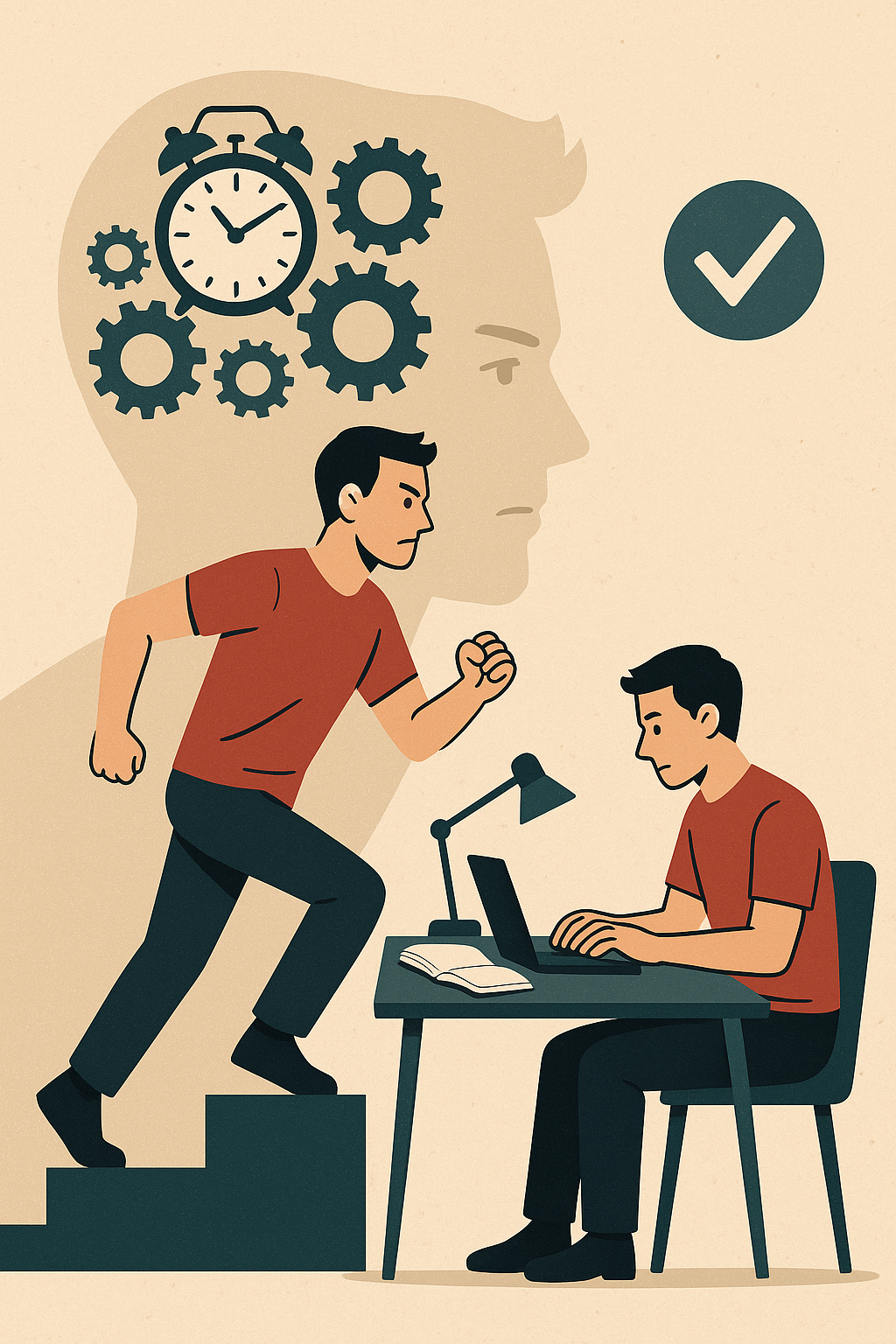
You need fewer decisions and smarter systems.

What Is Decision Fatigue (And Why It Wrecks Discipline)?
Your brain has limited cognitive resources for focus, self-control, and decision-making in a day. As the day goes on and you make more choices, your mental energy drops.
When decision fatigue hits, you’re more likely to:
-
Choose easier over better
-
Go with habit over intention
-
Say “screw it” instead of “stay the course”
So even if you want to be disciplined, by evening your brain is quietly whispering:
“Just do whatever is easiest. We’re done here.”
This is why relying on motivation + willpower alone is a losing strategy.
By the time you need them most, they’re gone.
Systems > Motivation (Why Structure Saves You)
Motivation is a feeling.
Systems are decisions you made ahead of time.
When you live system-first, you don’t ask:
-
“Do I feel like training?”
-
“What should I eat tonight?”
-
“Should I track today?”
You’ve already decided:
-
When you train
-
Roughly what you eat
-
How you track
Every system you install is one less decision you have to make when your brain is tired.
Smart discipline isn’t about being strong all the time.
It’s about needing less strength for the basics.
Step 1: Decide Once, Use Many Times
Anywhere you’re deciding the same thing over and over, you’re leaking energy.
Upgrade: Decide once, deploy it daily/weekly.
Examples:
Workouts:
-
Instead of: “What should I do today?”
-
Decide: one program you’ll follow for 8–12 weeks.
Training days:
-
Instead of: “Maybe I’ll go later.”
-
Decide: “I train Mon/Wed/Fri at 7 a.m. Those are appointments.”
Food:
-
Instead of: “What healthy thing can I make?”
-
Decide: 2–3 go-to breakfasts and lunches that hit your protein + calories.
You’re not winging it. You’re running pre-made decisions.
This is exactly what a Disciples of Discipline daily discipline program gives you:
Structure → less guessing → less decision fatigue → more follow-through.
Step 2: Simplify Your Food Environment
Nutrition is where decision fatigue loves to strike.
By 9–10 p.m. you’re:
-
Tired
-
Stressed
-
Depleted
And your brain is staring at:
-
A full pantry
-
10 apps on your phone that deliver food
-
0 pre-decided structure
Outcome? You already know.
Smart moves:
-
Standardize your first meal or two.
-
Example: Same protein-rich breakfast and lunch most days. Variety at dinner.
-
-
Pre-decide “default meals.”
-
“On busy nights, I eat X (simple stir-fry / tacos / prepped meal), not random takeout.”
-
-
Remove frictionless junk.
-
Don’t keep your biggest trigger foods in easy reach “for the kids” if you know you raid them.
-
Put higher-effort snacks in the house if you really want them (so it costs you effort).
-
The goal is not to have a perfectly clean kitchen.
The goal is to make the disciplined choice the easy one.
Step 3: Use Rules Instead of Negotiations
Every time you negotiate, you burn energy.
Every negotiation during decision fatigue tilts toward the wrong choice.
So you create simple rules:
Time rule:
-
“Kitchen closes at 9 p.m. No food after that.”
Frequency rule:
-
“I order food out once per week, max.”
Training rule:
-
“I never miss two workouts in a row.”
Screen rule:
-
“No social media in bed.”
When your tired brain starts arguing, you don’t debate your feelings. You follow the rule.
Rules are pre-made decisions that protect your future self when your current self is fried.
Step 4: Automate Your Identity Cues
The more you have to talk yourself into being disciplined, the more decision fatigue wins.
So you stack identity cues in your environment:
-
Lay out your gym clothes and Disciples of Discipline shirt the night before
-
Keep your water bottle and shaker where you can see them
-
Put a simple daily checklist where you can’t ignore it
Every cue is a quiet reminder:
“This is who we are. This is what we do.”
You’re not arguing yourself into discipline; you’re leaning into the identity you’ve already chosen.
Step 5: Pre-Plan “Low-Bandwidth” Days
Some days you’ll have full energy.
Some days you’ll be wrecked.
Decision fatigue hits hardest when:
-
You expect yourself to perform at 100%
-
But your reality is more like 30%
Solution? Plan for 30% days.
Create a “low bandwidth protocol”:
Training:
-
Full day: full program
-
Low day: 10–20 minutes of movement (walk, basic lifts, circuits)
Nutrition:
-
Full day: hitting macros
-
Low day: just protein + no binge is the win
Mindset:
-
Full day: journaling, planning
-
Low day: 3 lines in a notes app, simple “what’s my next right move?”
You’re not “off plan” on bad days. You’re running the scaled version of your plan.
That’s what keeps your identity intact: you’re always doing something.
Step 6: Weekly Reset — Fix the System, Not Your Worth
Decision fatigue usually means your system is too heavy for your real life.
Once a week, ask:
-
Where did I feel overwhelmed by choices?
-
Where did I fall into “screw it” mode?
-
What decision can I pre-make so that moment is easier next week?
Maybe you:
-
Move workouts to mornings
-
Prep simpler meals
-
Add a no-food-after-X rule
-
Trim your plan instead of pretending you can do it all
You don’t attack yourself. You upgrade the system.
How Disciples of Discipline Helps You Beat Decision Fatigue
We’re not here to give you 50 more things to think about.
We’re here to remove thinking where possible.
We do that by:
-
Creating structured daily discipline programs that tell you exactly what to do for movement, mindset, and macros. Less guessing. More doing.
-
Designing discipline-themed shirts and gear that act as daily armor—reminding you of your identity when your brain wants to default to easy.
-
Sharing simple, repeatable frameworks (rules, defaults, low-bandwidth days) so you can build a life where discipline is easier than self-sabotage.


You don’t need to be superhuman.
You need fewer decisions and better systems.
That’s smart discipline. That’s the Order.